Motley Fool released its four major predictions for Bitcoin in 2026, believing there are ample reasons to think Bitcoin could pump. The four bullish factors include: an unemployment rate rising to 4.6% that may pressure The Federal Reserve (FED) to cut rates, institutional investors holding about 8% of the total Bitcoin supply, the federal government's strategic reserves of $15-20 billion alongside emerging state-level reserves in places like Texas, and ETFs making investment more convenient, driving demand.
Unemployment rate 4.6% forces The Federal Reserve (FED) to lower interest rates macro logic
The primary support for Motley Fool's 2026 Bitcoin forecast comes from the possible interest rate cuts by The Federal Reserve (FED). The latest employment data shows that the United States added 64,000 jobs in November, a significant reversal from the loss of 105,000 jobs in October. However, almost all of the new jobs—70%—came from the healthcare sector, indicating that growth is not evenly distributed.
It is worth noting that the unemployment rate has risen to 4.6%, the highest since 2021. Whether the Federal Reserve (FED) will cut interest rates in January—or throughout 2026—remains a big unknown, but as the unemployment rate rises, the Federal Reserve (FED) may face greater pressure to lower rates. If this occurs, the price of Bitcoin may rise, as Bitcoin's value typically increases when interest rates are lower and borrowing is more affordable.
This logic is based on historical relevance. When the Federal Reserve (FED) lowered interest rates to near zero in 2020-2021, Bitcoin soared from $10,000 to $69,000. During the aggressive interest rate hikes by the Federal Reserve (FED) in 2022-2023, Bitcoin crashed to $15,000. After the Federal Reserve (FED) begins to lower interest rates in 2024-2025, Bitcoin rebounds and hits a new high of $126,000. This pattern shows that Bitcoin is extremely sensitive to the interest rate environment.
However, Atlanta Fed President Bostic recently stated that it is unlikely to cut interest rates next year, as inflation risks have not been completely eliminated. This internal disagreement creates uncertainty surrounding rate cut expectations. If the Fed does cut rates due to rising unemployment, it would be a significant positive for Bitcoin; however, if inflation rebounds and forces the Fed to pause or even restart rate hikes, Bitcoin could face a new round of selling.
The Triple Benefits of Interest Rate Cuts for Bitcoin
Opportunity Cost Decreases: The low interest rate environment reduces the opportunity cost of holding zero-yield assets (such as Bitcoin), increasing their relative attractiveness.
Increased Liquidity: Rate cuts are usually accompanied by an increase in money supply, with more funds flowing into risk assets including cryptocurrencies.
Expected Depreciation of the US Dollar: Interest rate cuts may lead to a weaker dollar, and Bitcoin, as a non-dollar asset, benefits from safe-haven demand.
JPMorgan's 170,000 vs Fundstrat's 250,000 prediction divergence
There are significant differences in the price predictions for Bitcoin in 2026, but they are quite optimistic about its direction. JPMorgan stated in November that the price of Bitcoin could rise to $170,000 by 2026, adding that there could be significant upward potential in the next 6 to 12 months. Based on the current price of about $89,000, $170,000 represents an increase of about 91%, which is the source of the “93% upward potential” mentioned by Motley Fool.
Market research firm Fundstrat's forecast is more optimistic, thanks to the exchange-traded funds (ETFs) making it easier to invest in cryptocurrencies. Bitcoin could reach between $200,000 and $250,000 by the end of 2026. Based on the current price, $250,000 would mean an increase of about 181%, nearly tripling the price.
This difference in predictions reflects different analytical approaches. JPMorgan's forecast is relatively conservative, possibly based on quantitative models such as historical volatility and institutional adoption speed. Fundstrat's forecast is more aggressive, possibly based on the assumption that the “ETF effect will continue to ferment.” Fundstrat co-founder Tom Lee has been one of Wall Street's most well-known Bitcoin bulls, and the BitMine he manages holds over 4 million Ethereum, with his bullish stance possibly influenced by a bias in holdings.
No one knows where the price will go, but the key conclusion is that many forecasts for the coming year expect prices to be much higher than today. This institutional consensus itself is an important signal. When mainstream institutions like JPMorgan, Fundstrat, Galaxy, and Forbes are all bullish on 2026, even if the specific targets differ, a consistency in direction has formed. This consensus could become a self-fulfilling prophecy: when everyone expects a rise, buying will surge in advance, pushing the price up for real.
Institutional holding 8% with dual demand from state-level reserves emerging
More institutional investment will become a catalyst. The launch of the Bitcoin ETF last year gave cryptocurrencies a new level of credibility, prompting more investment firms to purchase these cryptocurrencies and offer these ETFs to their clients. An increasing number of institutional investors are scrambling to buy Bitcoin, and this trend is unlikely to slow down by 2026.
For example, institutional investors hold about 8% of the total Bitcoin supply. The total supply of Bitcoin is approximately 19.7 million coins (excluding lost coins), and 8% is about 1.58 million coins, valued at approximately $140 billion at current prices. This scale has grown from nearly zero to this in just two years, demonstrating the astonishing speed of institutional adoption. Grayscale anticipates more investment inflows by 2026, referring to it as “the dawn of the institutional era,” and states that this could lead to “a historic high in the first half of this year.”
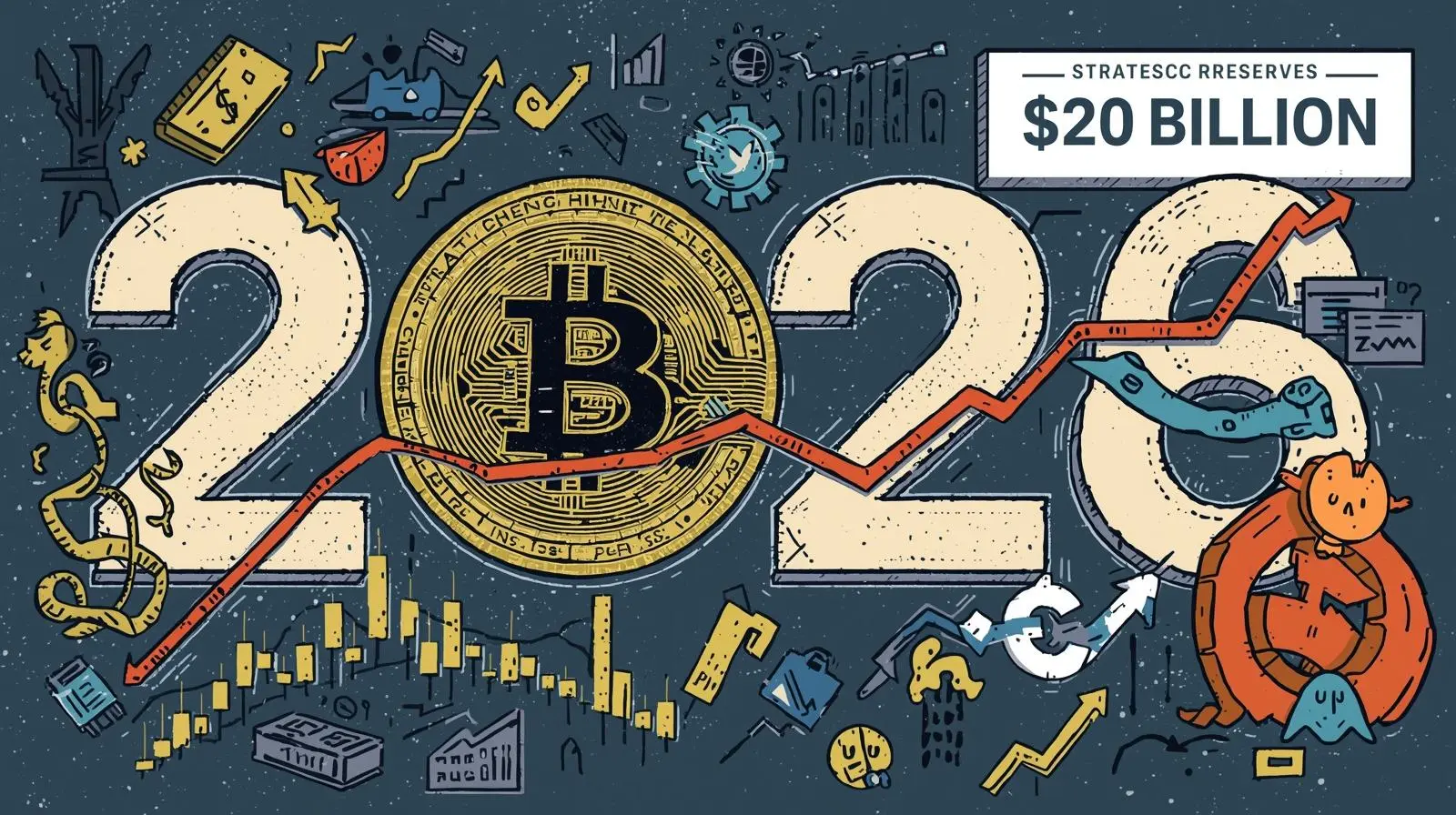
Government-supported Bitcoin reserves may drive price increases. Earlier this year, the federal government established a strategic Bitcoin reserve using previously seized existing Bitcoins. As of August, the estimated value of these Bitcoins in the reserve is around $15 billion to $20 billion. Currently, the government will not purchase new Bitcoins to increase the reserves, but even the establishment of reserves has prompted states to begin pursuing their own reserves.
Texas is the first state to establish state-level Bitcoin reserves, recently announcing an investment of $5 million in cryptocurrency reserves, with plans to double this amount in the coming months. New Hampshire has legislated to establish its own Bitcoin reserves, and other states are considering following suit. Just as ETFs have added credibility to cryptocurrencies and boosted prices, more states establishing and increasing these reserves could become another factor in driving the 2026 Bitcoin forecast.
The significance of this state-level reserve trend goes beyond the amount itself. The $5 million from Texas is insignificant in the global Bitcoin market capitalization (approximately $1.7 trillion), but its symbolic meaning is extremely profound. When state governments incorporate Bitcoin into their official reserves, it is equivalent to endorsing Bitcoin as a “legitimate asset.” This endorsement will influence allocation decisions of conservative institutions such as pension funds and insurance companies, as they are often limited to “only investing in government-approved assets.”
Another effect of state-level reserves is to trigger competition. When Texas takes the lead, other states may follow suit out of a desire “not to fall behind.” This kind of interstate competition has been common throughout American history, from attracting corporate headquarters to vying for high-tech industries, with states competing to offer favorable policies. Bitcoin reserves could become the focus of a new round of interstate competition, and if 10-20 states establish reserves, the cumulative scale could reach billions of dollars.
Bitcoin has plummeted by about 19% over the past year, leaving some investors curious about where this leading global cryptocurrency will head in 2026. Is the recent drop a sign of future trends, or is there hope for a rebound in the cryptocurrency market next year? Motley Fool believes there are plenty of reasons to be optimistic about the 2026 Bitcoin forecast.
The common theme of the four major predictions is “demand expansion”: interest rate cuts lower holding costs, increased institutional allocation, state-level reserves create new demand, and ETFs lower investment thresholds. If these factors ferment simultaneously in 2026, a Bitcoin surge to $170,000 or even $250,000 is not impossible. However, investors also need to be wary of risks: if the Federal Reserve fails to cut interest rates, institutional adoption slows down, or a significant security incident occurs, the 2026 Bitcoin forecast may fall short, and prices could even drop below $80,000. A balanced strategy is to diversify allocations and not bet all funds on a single scenario.


