The Bank of Korea (BOK) released the “Financial Stability Report” revealing that the South Korean crypto market is undergoing a structural transformation. As Bitcoin is set to surpass $100,000 in 2025, South Korean retail investors are choosing to cash out significantly rather than doubling down, with the daily trading volume on major crypto platforms plummeting over 80% compared to the peak in 2024. Hot money has shifted to the local stock market, with the KOSPI soaring over 70% this year, making it the best-performing index globally, along with leveraged ETFs in the US stock market.
Bitcoin breaking 100,000 USD triggers collective profit-taking by Korean retail investors
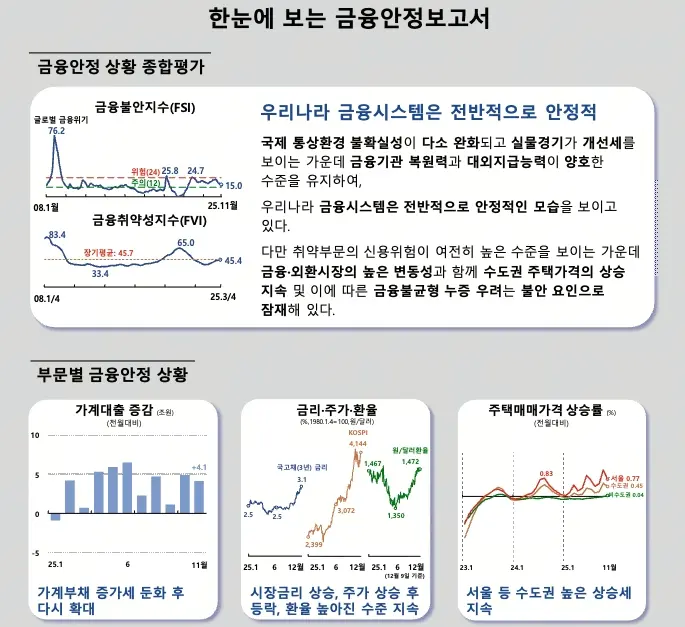
(Source: Bank of Korea)
A report from the Central Bank of Korea shows that the behavior of South Korean investors has undergone a significant change. This means that even if Bitcoin breaks through 100,000 USD this year, South Korean investors still choose to cash out rather than double down. This behavior pattern stands in stark contrast to the global market, where American and European investors continue to buy through ETFs while South Korean retail investors are collectively exiting.
The Bank of Korea stated: “The turnover rate in the domestic crypto market is very high, as most participants are retail investors who tend to profit through short-term trading.” This short-term mindset has led the Korean market to become a typical “quick in and out” type market, rather than a stronghold for long-term value investment. When Bitcoin breaks through psychological barriers, the first reaction of Korean retail investors is not FOMO (fear of missing out), but taking profits.
The daily volume of major encryption platforms has fallen by over 80% compared to the peak in 2024, which is an astonishing figure. South Korea was once a major contributor to global crypto market volume, with South Korean crypto exchanges often ranking in the top five worldwide during peak periods. The collapse in volume today shows that this once fervent market is experiencing a rapid cooling.
The so-called “kimchi premium”—the price of cryptocurrencies in South Korea being higher than international benchmarks—was a reliable indicator of retail investor frenzy. During the bull markets of 2017 and 2021, the kimchi premium reached as high as 20-30%, indicating that Korean retail investors were willing to pay higher prices to buy cryptocurrencies. However, the kimchi premium has now nearly vanished, with negative premiums even appearing during certain periods, which is a clear signal of a complete reversal in market sentiment.
KOSPI big pump 70%吸走加密熱錢
The Bank of Korea attributes the slowdown in the crypto market to the prosperity of the local stock market. The KOSPI has risen over 70% so far this year, becoming the best-performing major index globally, mainly driven by AI-related stocks such as Samsung Electronics and SK Hynix. This local stock market frenzy has provided Korean retail investors with more attractive investment options than cryptocurrencies.
The data on capital flow confirms this. When KOSPI began to accelerate its rise in early 2025, the net inflow into South Korean crypto exchanges started to turn into net outflow. Retail investors clearly made a rational choice: rather than risking in the volatile crypto market, it is better to participate in the local stock market, which is supported by corporate profits, has clear regulations, and better liquidity. Samsung Electronics and SK Hynix benefited from the surge in global AI chip demand, with performance continuously exceeding expectations, providing investors with a more certain return path.
In addition to the local stock market, U.S. leveraged ETFs have also become a new favorite among retail investors in South Korea. These products offer 2x or 3x exposure to U.S. tech stocks, attracting a large amount of Korean capital against the backdrop of continuous gains in the U.S. stock market. Compared to the extreme volatility of cryptocurrencies, leveraged ETFs, while still high-risk, at least have the support of real corporate profits and the U.S. regulatory system as a foundational backing.
Analyst AB Kuai Dong observed: “Where have all the South Korean retail investors gone? The answer: to the neighboring stock market.” This large-scale migration of funds not only affects the local crypto market in South Korea but also weakens an important source of buying pressure for the global crypto market. During the bull markets of 2017 and 2021, the frenzied buying by South Korean retail investors often pushed Bitcoin to break through important resistance levels at critical moments. The lack of this support now may be one of the reasons for a more moderate rebound in 2025 compared to previous cycles.
Three Major Structural Risks in the Korean Crypto Market
1. Extreme concentration raises concerns of manipulation
· The top 10% of investors account for 91.2% of the total volume.
· A small number of large holders may manipulate prices
· The lack of professional market makers has led to limited liquidity.
2. The regulatory island effect amplifies volatility
· Prohibit enterprises from participating and foreign investors from trading on domestic exchanges.
· Market structure almost entirely dominated by retail investors
3. The Double-Edged Sword of Institutional Reform
· Starting in June, non-profit companies are allowed to sell encryption assets.
· Professional investors trial trading, spot Bitcoin ETF under discussion
· BOK warns: Open institutions and ETFs may exacerbate the vulnerability of the Korean market amid global fluctuations.
Diverging Paths of Global Institutionalization and Korean Retailization
In stark contrast to the South Korean market is the global institutionalization trend. Since the SEC approved the spot Bitcoin ETF in January 2024, the international market has rapidly institutionalized. These products have attracted over $54 billion in net inflows, with BlackRock's IBIT alone accumulating over $50 billion in assets under management. The South Korean Central Bank report acknowledges this divergence, pointing out that the global crypto market is increasingly correlated with traditional stocks, as the correlation between Bitcoin and the S&P 500 has significantly increased since 2020.
In contrast, the South Korean market is relatively unaffected by these global dynamics. The South Korean Central Bank attributes this to a high concentration of retail investors, liquidity constraints, and capital controls. The report predicts that allowing financial institutions and foreign investors to participate will help establish appropriate market-making mechanisms and alleviate liquidity constraints. However, the central bank also warns: “When enterprises and foreign investors with superior information and capital enter the market, domestic cryptocurrency prices may become more sensitive to changes in supply and demand.”
South Korea's crypto market is at a turning point. The shift from aggressive buying to profit-taking indicates that the investor base is maturing, but it also strips away a key source of momentum for the global market. The days when retail investors in South Korea single-handedly drove the global rebound seem to be fading.
Disclaimer: The information on this page may come from third parties and does not represent the views or opinions of Gate. The content displayed on this page is for reference only and does not constitute any financial, investment, or legal advice. Gate does not guarantee the accuracy or completeness of the information and shall not be liable for any losses arising from the use of this information. Virtual asset investments carry high risks and are subject to significant price volatility. You may lose all of your invested principal. Please fully understand the relevant risks and make prudent decisions based on your own financial situation and risk tolerance. For details, please refer to
Disclaimer.
Related Articles
River (RIVER) Price Keeps Pumping as TD Indicator Signals Another Rally
Analyst Ali Martinez highlights the accuracy of the TD Sequential indicator in predicting River (RIVER) price movements. The indicator has consistently identified significant buy and sell signals throughout RIVER's volatility, suggesting potential future trends based on current signals.
CaptainAltcoin10m ago
ETH 15-minute decline of 0.88%: Capital outflow dominates market, intensifying short-term selling pressure
On March 22, 2026, from 21:00 to 21:15 (UTC), Ethereum (ETH) recorded a -0.88% return rate within 15 minutes, with the price fluctuating in the range of 2029.54 to 2060.75 USDT, reaching an amplitude of 1.52%. Market attention has increased, short-term volatility has significantly intensified, reflecting rapid conversion of funding pressure into price pressure.
The main driver of this anomaly is accelerated capital outflows from trading platforms: approximately 420,690 USD equivalent of ETH flowed in within 10 minutes, but the number of withdrawals reached 2,319 transactions in the past 1 hour, far exceeding deposits during the same period by 5
GateNews1h ago
BTC Drops 0.58% in 15 Minutes: Tight Liquidity and Institutional Hedging Create Downward Pressure
2026-03-22 21:00 to 21:15 (UTC), BTC recorded a -0.58% return within just 15 minutes, with prices fluctuating in the range of 67562.1 to 68223.5 USDT, with an amplitude of 0.97%. During this period, market sentiment was highly tense, overall attention increased, and short-term volatility accelerated noticeably.
The main driving force behind this anomaly was the resonance formed by spot market liquidity shortage and medium-sized funds accelerating their exit. On-chain data shows a significant net outflow of -371.99 BTC in the $100k-$1M transaction range, driving selling
GateNews1h ago
Risk-Off Drips throughout Markets
Geopolitical tensions and rising uncertainty have led to a risk-off sentiment in global markets, with investors moving away from assets like Bitcoin and Ethereum. High oil prices and inflation concerns influenced portfolio adjustments, while Bitcoin selling pressure increased as short-term holders took profits. The market remains sensitive amid low sentiment.
CryptoBreaking1h ago
Bitcoin Has Stabilized, But Investors Are Paying Up for Downside Protection: VanEck
Bitcoin's volatility has decreased to around $70,000, but traders are still heavily investing in downside protection. Although premiums for puts have dropped, they remain high historically, suggesting caution among investors. This defensiveness may signal an impending price bottom, as similar market conditions in the past have led to recoveries.
Decrypt1h ago


